top of page

The Agentic AI Revolution: A Comprehensive Guide for Business Leaders

Manus AI / PerformOS

15 March 2026 at 12:00:00


We are moving from an era of AI assistance to an era of AI execution. This comprehensive guide breaks down the current landscape of agentic AI, the technologies driving it, who the major players are, and what it means for the future of work.


1.   The Shift from Chatting to Doing

For the past two years, the business world has been captivated by artificial intelligence that can converse, draft emails, and generate images. But as we move deeper into 2026, a fundamental shift is occurring. We are moving from an era of AI assistance to an era of AI execution. This is the dawn of Agentic AI — systems that do not just wait for prompts, but actively reason, plan, and execute multi-step tasks across your applications.

For business leaders and non-technical executives, understanding this shift is no longer optional. It is the difference between optimizing existing processes and entirely reimagining how your organization operates.


To understand agentic AI, consider the difference between a search engine and a human assistant. If you ask a traditional AI chatbot to book a flight to New York, it will provide you with a list of options and links. If you ask an AI agent to do the same, it will navigate to the airline's website, select the best flight based on your calendar and preferences, enter your payment details, and email you the itinerary.


Agentic AI represents a transition from reactive models to proactive systems. These agents can be delegated complex, long-running tasks. They can monitor signals, anticipate needs, and adapt as circumstances change. A recent Boston Consulting Group (BCG) report estimates that effective AI agents can accelerate business processes by 30 to 50%. However, realising this value requires more than just buying new software. According to IBM, 78% of C-suite executives believe that achieving the maximum benefit from agentic AI requires a fundamentally new operating model.


2.   The Universal Connector: Model Context Protocol (MCP)

One of the most significant barriers to enterprise AI adoption has been integration. Connecting an AI model to a company's proprietary data — CRMs, ERPs, internal wikis — traditionally required brittle, custom-built APIs. This changed with the introduction of the Model Context Protocol (MCP).


Originally developed by Anthropic and now an open industry standard, MCP acts as the "USB-C of AI". It provides a universal, standardised way for AI models to securely connect with external tools and data sources. MCP solves two critical problems:


Data Access: It allows AI to seamlessly retrieve data from disparate systems (e.g., pulling customer history from Salesforce while simultaneously checking inventory in SAP) without custom engineering.


Action and Governance: It creates a standardised way for an AI to act on behalf of the current user — operating within the exact permissions of the employee using it, improving traceability and security.


The adoption of MCP has been explosive. Microsoft has integrated it into Copilot Studio and Windows, Google offers managed MCP servers on Google Cloud, and OpenAI has made it a core component of its Apps SDK. For CIOs, MCP is rapidly becoming the control layer for how AI interacts with the enterprise.


3.   The Rise of Claws and Computer-Using Agents

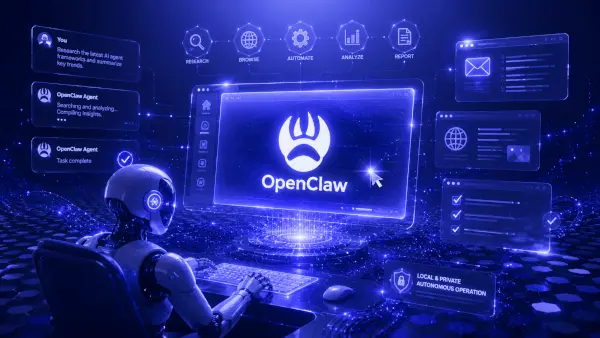
In late 2025 and early 2026, the AI landscape was disrupted by a new category of technology: Computer-Using Agents (CUAs). Unlike API-bound agents that talk to software behind the scenes, CUAs interact with computers exactly as humans do. They can see the screen, move the virtual mouse, click buttons, and type on the keyboard.


This movement was catalysed by an open-source project called OpenClaw. Created by Austrian developer Peter Steinberger, OpenClaw allowed users to run an autonomous agent locally on their own hardware. Users could message the agent on WhatsApp or Telegram, and it would execute tasks on their computer — from managing emails to complex web research. The project surpassed 214,000 GitHub stars faster than Docker or React. The term "claws" has now become industry shorthand for local, autonomous AI agents.


The success of OpenClaw triggered a rapid response from major AI labs. Key releases include:


OpenAI Operator: An agent that can navigate the web, fill out forms, and execute tasks within a browser. OpenAI subsequently acquired the OpenClaw project and hired its creator.


Anthropic Claude Computer Use: Claude 3.5 and 4.6 models upgraded with the ability to control a computer directly, using standard software programs designed for people.


Perplexity Personal Computer: Launched in March 2026, a dedicated Mac mini that runs 24/7 as a digital proxy, orchestrating tools and files securely on behalf of the user.


4.   The 2026 Competitive Landscape: Who Has What?

The race to dominate the agentic AI space has led to a flurry of product launches. Here is a breakdown of the major players as of March 2026:


Microsoft — Copilot Wave 3, Copilot Cowork, Copilot Studio: Deep integration into Microsoft 365. Copilot Cowork, powered by Anthropic, handles long-running, multi-step tasks with a strong focus on enterprise trust and Work IQ context.


Anthropic — Claude Sonnet 4.6, Claude Cowork: Industry leader in reasoning and computer use. Recently acquired Vercept to advance GUI automation. Powers the agentic capabilities of several competitors.


OpenAI — Operator, CUA, Agents SDK: Focus on web-based task execution and developer tools. Acquired OpenClaw to bolster local agent capabilities.


Google — Gemini Agent, Project Mariner: Deep integration into Chrome via sidebars. Focus on auto-browse capabilities and ecosystem integration.


Perplexity — Personal Computer, Computer for Enterprise: Hardware-based AI proxies (Mac mini) that run 24/7. Enterprise version connects directly to Snowflake, Salesforce, etc., for autonomous research.


Manus AI — General AI Agent: Acquired by Meta. Focuses on personal agents accessible via messaging apps (Telegram) that execute complex, multi-step workflows.


Nvidia — NemoClaw: An open-source enterprise platform allowing companies to dispatch secure AI agents for their workforces, regardless of underlying hardware.


5.   How AI Learns Your Work: Skills, Sidebars, and Scheduled Tasks

The true power of agentic AI lies in its ability to adapt to the individual user. We are moving away from generic AI toward highly personalised digital colleagues.


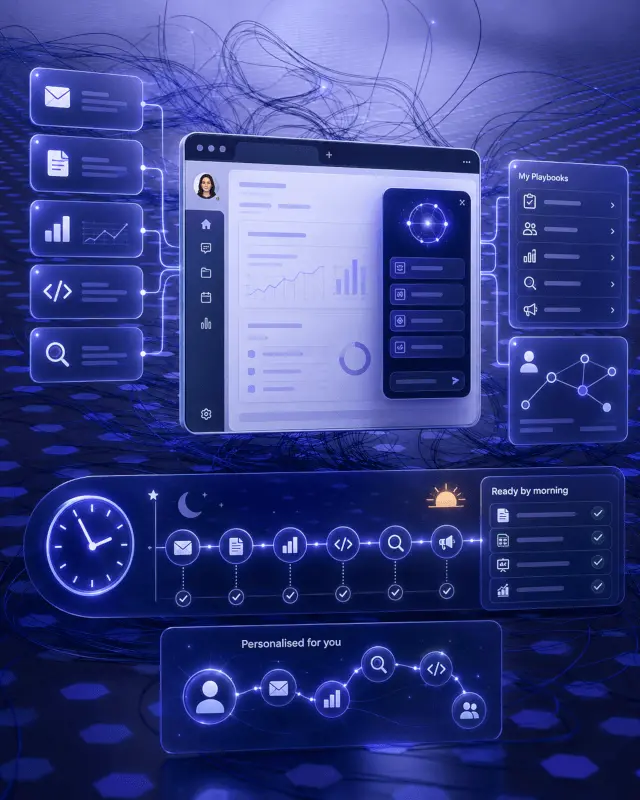
AI agents are no longer limited to their pre-training. Users can now teach agents specific workflows by creating skills or playbooks. For example, OpenClaw utilises a community registry called ClawHub, where users can download skills for managing Gmail, trading crypto, or updating notes. Similarly, Microsoft allows teams to teach Copilot their preferred workflows, ensuring the AI formats reports or analyses data exactly as the company requires.


The web browser is becoming the primary interface for agentic AI. Google has rolled out its Gemini assistant as a persistent sidebar in Chrome, capable of summarising pages, answering questions, and executing web tasks. Microsoft Edge offers similar functionality with Copilot Vision. These sidebars act as always-on companions that understand the context of whatever the user is viewing.


Perhaps the most transformative feature of agentic AI is the ability to run scheduled, asynchronous tasks. Users can give an agent a directive before logging off, and the agent will work overnight — delivering research reports, competitor analysis, lead lists, and code fixes ready in the morning.


6.   The Business Impact: Jobs and ROI

The integration of agentic AI is already reshaping the workforce. While AI is not replacing entire jobs wholesale, it is rapidly absorbing specific, routine tasks across various roles:


Legal and Administrative: Agents like Claude Cowork can review contracts, extract clauses, and organise case files in minutes, reducing the need for junior support roles.


Software Development: AI coding assistants are moving beyond autocomplete. Agents can now review codebases, identify bugs, and implement patches autonomously.


Research and Data Analysis: Agents can scrape the web, compile data from multiple sources, and generate comprehensive market reports without human intervention.


Furthermore, the rise of Agentic Commerce is fundamentally altering consumer behaviour. McKinsey projects that AI agents acting as personal shoppers — negotiating deals and managing purchases — could orchestrate up to $1 trillion in revenue in the US retail market by 2030. Brands must now optimise their marketing not just for human consumers, but for the algorithms acting on their behalf.


7.   The Security Elephant in the Room

With great autonomy comes significant risk. The cybersecurity community has raised urgent alarms about the rapid deployment of agentic AI. When an AI agent has the ability to read emails, access databases, and execute financial transactions, it becomes a prime target for malicious actors. Security researchers have highlighted several critical vulnerabilities:


Prompt Injection: Attackers can hide malicious instructions within seemingly benign text (e.g., a website or document). If an AI agent reads that text, it may execute the hidden command, bypassing its own safety protocols.


Supply Chain Attacks: The reliance on community-built skills (like those on ClawHub) introduces the risk of downloading compromised code that grants attackers access to the agent's host system.


Over-Permissioning: Many early deployments of MCP and local agents have been misconfigured, exposing sensitive API keys and corporate data to the public internet.


For enterprise leaders, governance and security must be embedded at the protocol layer before widespread deployment.


8.   Conclusion: The Imperative for Leaders

The agentic AI revolution is not a future possibility — it is a present reality. The technologies released in early 2026, from MCP and OpenClaw to Copilot Wave 3 and Perplexity Computer, have fundamentally changed what computers can do.


For business owners and organisation leaders, the mandate is clear:


1. Educate Your Teams: Ensure your workforce understands the difference between generative AI and agentic AI.


2. Audit Your Infrastructure: Evaluate how tools like MCP can safely connect your siloed data to AI models.


3. Prioritise Security: Implement strict governance frameworks to manage what AI agents are permitted to do on behalf of your employees.


4. Rethink the Operating Model: Do not just use agents to do old things faster. Use them to unlock entirely new capabilities and business models.


As Jared Spataro, Microsoft's Chief Marketing Officer for AI at Work, stated: "AI must do more than optimise what already exists. It must unlock new levels of creativity, innovation, and growth." The companies that embrace this autonomous future will define the next decade of business.

bottom of page